“There's no real objection to escapism, in the right places... We all want to escape occasionally. But science fiction is often very far from escapism, in fact you might say that science fiction is escape into reality... It's a fiction which does concern itself with real issues: the origin of man; our future. In fact I can't think of any form of literature which is more concerned with real issues, reality.”
― Arthur C. Clarke
Black Uhuru is a Jamaican reggae group formed in 1972, initially as Uhuru (Swahili
for 'freedom'). The group has undergone several line-up changes over
the years, with Derrick "Duckie" Simpson as the mainstay. They had their
most successful period in the 1980s, with their album Anthem winning the first ever Grammy Award for Best Reggae Album in1985.
The most successful of the second-generation reggae bands, Black Uhuru
maintained their high quality despite numerous personnel changes in
their 40-plus-year history. The first reggae band to win a Grammy award,
for their 1983 album Anthem, Black Uhuru was called "The most dynamic and progressive reggae act of the 1970s and early '80s."
With the addition of harmony singer Puma Jones,
an African-American woman who held a Master's degree from Columbia
University and was a former member of the female group Mama Africa in
1981, Black Uhuru entered their most commercially successful period. In addition to recording a memorable studio album, Red, and an exciting live album, Tear It Up, the group reached its peak with the release of Anthem
in 1983. Remixed and revised for release in the United States, the
remade version was re-released in Europe shortly afterwards. Although
the album received a Grammy, internal problems caused the band to
splinter the following year. Rose was replaced by soundalike Junior Reid. Jones and Reid remained with the band until 1989. Although Reid
left when visa problems prevented him from touring, Jones, who was
replaced by Olufunke, was forced to step down after being diagnosed with
cancer. She died on January 28, 1990, and was buried in her home state
of South Carolina. The original three members -- Simpson, Spencer, and Dennis -- reunited to record a trio album, Now, in 1990. They've continued to tour and perform in this configuration.
Susumu Yokota (横田 進 Yokota Susumu, or ススム・ヨコタ Susumu Yokota) was a Japanesecomposer. He released several albums under pseudonyms including Stevia, Ebi, and others.
Yokota was well known in the English-speaking independent music scene for his albums of experimental ambient music. He also had a long career as a house music DJ and released several highly regarded albums of house music.
Peter Joseph Andrew Hammill (born 5 November 1948) is an English singer-songwriter. He is a founding member of the progressive rock band Van der Graaf Generator.
Best known as a singer, he also plays guitar and piano. He also acts as
a record producer for his own recordings and occasionally for other
artists. In 2012, he was recognised with the Visionary award at the
first Progressive Music Awards.
Peter Hammill is a prolific songwriter, singer, and co-founder of Van Der Graaf Generator;
he has also released dozens of solo recordings on a series of labels
and later on his own Fie! Records. Though he never attained the public
profile of fellow countryman David Bowie, Hammill's recording career has proven just as groundbreaking and uncompromising. Hammill
was born in 1948 in the west London suburb of Ealing, moving to Derby
when he was 12. As a child and young adolescent, he was subject to
Catholic teachings, particularly those of the Jesuit order. Though he
ceased practicing the religion later in his teens, its influence, as
well those of history, depth psychology, and philosophy, have been
profound in his music. Hammill discovered music at a fairly young age, learning piano as a child.
He began playing guitar in his teens. He was steeped
in classical music as well as opera and avant-garde, but also loved
rock & roll. His discovery of new wave science fiction authors
Michael Moorcock, Harlan Ellison, and Tom Disch, among others, also
influenced his thoughts and music at the time.
While studying at Manchester University, Hammill met drummer Nick Peame and keyboardist /saxophonist Chris Judge Smith (who had just returned from studying at the University of California in Berkeley); the trio formed the first version of Van Der Graaf Generator, though Judge Smith left when the band began to tour in 1968, and Peame left in 1969.
In the middle of his solo run, Van Der Graaf Generator reunited in 1975 and released Godbluff. They followed it with two offerings in 1976, Still Life and World Record. Banton and Jackson left the group almost immediately after. Hammill and Evans changed the name to Van Der Graaf, added violinist Graham Smith, and recorded The Quiet Zone in 1977. A live album, Vital, followed in 1978, and the group disbanded again, though its members continued to appear on Hammill's solo work. The songwriter resumed his solo career with 1977's provocative Future Now, followed by pH7
in 1978. These marked his final two dates for Charisma. Taken with his
earlier solo recordings, they make for diverse and groundbreaking run in
art/prog rock that has never lacked in eclecticism, ambition, and
adventurousness.
In 1992 the songwriter formally launched his Fie! Records label with an acknowledged masterpiece, Fireships, cut in his home studio in Bath. It was followed by The Noise and a live offering in 1993, and Roaring Forties in 1994.
In the 21st century, Hammill
showed no sign of slowing down. Playing live somewhat regularly, he set
up his own website, Sofa Sound, in order to distribute his recordings
to fans and communicate with them via a blog and regular news updates.
Significant albums include 2000's None of the Above, 2002's Clutch, and 2004's Incoherence.
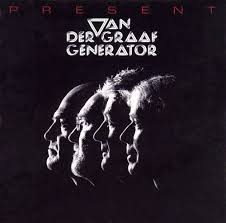
In 2004, the classic lineup of Van Der Graaf Generator played together for the first time since the '70s at a pair of Hammill's solo shows. Though he'd rejected the idea of another reunion for over a decade, he, Jackson, Evans, and Banton re-formed and issued Present,
a brand-new studio album, in 2005. Fans and critics agreed on its
significance and merit. It made several year-end lists, including The
Wire's. A live record was cut at Royal Albert Hall that year and issued
in 2008, the same year as their next studio offering, Trisector. A Grounding in Numbers and Alt were issued on Esoteric in 2011 and 2012, respectively.
After a long email correspondence, Hammill invited the eclectic and prolific New York guitarist Gary Lucas (Captain Beefheart)
to his studio in Bath with no particular goal in mind. Ideas flew fast
and furious and the pair emerged with the accessible yet thoroughly
experimental The Other World.
It was issued by Esoteric in February of 2014 followed not long after
by another solo release, ...All That Might Have Been. 2017 saw the
release of Hammill's 35th solo LP, another ambitious, entirely self-played collection called From the Trees. https://www.allmusic.com/artist/peter-hammill-mn0000843607/biography
-
Van der Graaf Generator are an English progressive rock band, formed in 1967 in Manchester by singer-songwriters Peter Hammill and Chris Judge Smith and the first act signed by Charisma Records.
They did not experience much commercial success in the UK, but became
popular in Italy during the 1970s. In 2005 the band reformed, and
continue to perform as of 2016.
The band formed at Manchester University,
but settled in London where they signed with Charisma. They went
through a number of incarnations in their early years, including a brief
split in 1969. When they reformed, they found minor commercial success
with The Least We Can Do Is Wave to Each Other (February 1970), and after the follow-up album, H to He, Who Am the Only One (December 1970), stabilised around a line-up of Hammill, organist Hugh Banton, saxophonist David Jackson, and drummer Guy Evans. The quartet subsequently achieved significant success in Italy with the release of Pawn Hearts in 1971.
After several exhausting tours of Italy, the band split in 1972. They reformed in 1975, releasing Godbluff
and frequently touring Italy again, before a major line-up change and a
slight rename to Van der Graaf. The band split in 1978. After many
years apart, the band finally united at a gig at the Royal Festival Hall
and a short tour in 2005. Since then, the band has continued as a trio
of Hammill, Banton, and Evans, who record and tour regularly in between
Hammill's concurrent solo career.
The group's albums have tended to be both lyrically and musically
darker in atmosphere than many of their progressive rock peers (a trait
they shared with King Crimson, whose guitarist Robert Fripp guested on two of their albums), and guitar solos
were the exception rather than the rule, preferring to use Banton's
classically influenced organ, and, until his departure, Jackson's
multiple saxophones. While Hammill is the primary songwriter for the
band, and its members have contributed to his solo albums, he is keen to
stress that the band collectively arranges all its material. Hammill's
lyrics frequently covered themes of mortality, due to his love of
science fiction writers such as Robert Heinlein and Philip K. Dick,
along with his self-confessed warped and obsessive nature. His voice
has been a distinctive component of the band throughout its career. It
has been described as "a male Nico" and would later on be cited as an influence by Goth
bands in the 1980s. Though the group have generally been commercially
unsuccessful outside of early 1970s Italy, they have inspired several
musicians, including John Lydon and Julian Cope. wiki
-
-
click here Download discography via torrent from here
June 2011 marked the 43rd anniversary of the founding of Can when
Holger Czukay (bass), David Johnson (flute), jazz drummer Jaki Liebezeit
and beat guitar player Michael Karoli met in classical conductor and
piano player Irmin Schmidt's Cologne apartment in 1968. Their first gig,
a collage of rock music and tape samples, took place at Schloss
Nörvenich (Castle Nörvenich, near Cologne). The show is documented on
the audio cassette Prehistoric Future.
The nameless collective had established its first studio, Inner
Space, at the castle when American sculptor Malcolm Mooney, visiting
Irmin and Hildegard Schmidt, joined the band. His intuitive drive led
the musicians toward a unique take on rock music and the track Father
Cannot Yell originated from one of these early sessions. David Johnson,
who by then had become the band's sound engineer, left at the end of
1968. Around this period, the lack of a name was solved by Mooney and
Liebezeit who came up with The Can.
The first Can album, Monster Movie (1969), defined Can music.
Played and recorded spontaneously and driven by repetitive rhythms, the
album was recorded directly on to a 2-track machine and then extensively
edited. Soundtracks featuring film scores from 1969 and 1970, was the
next album. Just after the record was released, Malcolm Mooney left the
band and returned to the U.S. The Mooney era is extensively documented
on Can - Delay, released in 1982.
In May 1970, Japanese singer Kenji "Damo" Suzuki joined Can after
being spotted by Holger Czukay and Jaki Liebezeit busking in Munich. The
very same evening he performed with the band at the Blow Up club.
In December 1971, Can founded the Can Studio - known as Inner Space
until 1978 when Can soundman René Tinner took over running the
operation - in a former cinema in Weilerswist, close to Cologne. All
subsequent Can albums were produced there except Rite Time. The studio
has now been painstakingly disassembled and is being reconstructed to
scale as a working exhibit at the German Rock'n'Pop Museum in Gronau,
near the Dutch border.
The period 1970-2 was a breakthrough time for the band with Tago
Mago (1971) impressing critics in England and France as well as Germany.
Ege Bamyasi, released in 1972, featured the track Spoon, the theme tune
for the crime thriller Das Messer and also the band's first chart
success in Germany. The track, which was the first time that Can used an
early version of a drum machine, led to a Goldene Europa TV award in
recognition of Can's soundtrack work. Ege Bamyasi also included the
music from another TV crime series in the form of Vitamin C.
The success of Spoon inspired the band to try to reach a wider
audience which led to the Can Free Concert. The event was filmed by
Martin Schäfer, Robbie Müller and Egon Mann for director Peter Przygodda
at the Cologne Sporthalle on February 3rd, 1972. British music weekly
Melody Maker wrote: "Can are without doubt the most talented and most
consistent experimental rock band in Europe, England included." French
magazine Rock & Folk portrayed Can's music as "one of the most
impressive musical experiments offered by contemporary bands."
Future Days (1973) was the last Can album with Damo Suzuki. First
Michael Karoli took over the vocal duties, followed by short interludes
with a succession of singers, among them Tim Hardin. The recording of
Soon Over Babaluma that same year marked the end of the era of recording
straight onto 2-track. Landed (1975), was the first Can LP to be
produced using multi-track technology. The album led Melody Maker to
call them "the most advanced rock unit on the planet."
Double album Unlimited Edition (1976) was an extended version of a
release that had quickly sold out as Limited Edition two years earlier.
Among the tracks were the multi-facetted experiments known as the
Ethnological Forgery Series (EFS). Flow Motion, also released in 1976,
featured the disco hit I Want More and saw the band performing on UK
primetime hitshow Top Of The Pops. The following year Can was augmented
by ex-Traffic rhythm duo Rosko Gee (bass) and Reebop Kwaku Baah on
percussion.
Holger Czukay had retired as a bass player and on Saw Delight was
in charge of "special sounds". His new instrument was a shortwave radio
receiver; while his idea to create new impulses for the musical process
via radio signals didn't fit within the new Can structure, it became the
basis for his first solo album, Movies (1979). The next Can album, Out
of Reach (1978), was recorded without Czukay, who had left the band in
May 1977, during the final Can tour. On the last show of the tour, in
Lisbon at the end of May, Can performed in front of 10,000 fans. The
double album Cannibalism (1978) was not just a "Best of ...."
compilation, it was in fact, an early indication that Can's reputation
would continue to grow.
The British avant-garde and several punk acts were deeply inspired
by Can. Speaking for many, Pete Shelley (Buzzcocks) is quoted on the
Cannibalism cover: "I never would have played guitar if not for Marc
Bolan and Michael Karoli of Can". At the end of 1978 the band released
Can. Meanwhile Michael Karoli built the Outer Space Studio studio in
France, close to Nice. It was there in November 1986 that the original
Monster Movie line-up got together again, with vocalist Malcolm Mooney
to record Rite Time. The album was released in 1988. The band assembled
again at the Can Studio with the same line-up minus Holger to record the
track Last Night Sleep for Wim Wenders' film Until the End of the
World.
In May 1997, the remix CD Sacrilege provided further evidence of
the durability of Can's music. For this tribute, prominent
representatives of the techno, dance and ambient scene reworked 15
classic Can tracks. Ironically, the importance of Can's contribution to
the wider musical pantheon was summed up by Andrew Weatherall who
refused an offer to remix a Can track for Sacrilege: "I love to remix
other people's work. But Can? No way. You don't touch music that
perfect. There is nothing to add or take away."
The band's chosen means of celebrating its 30th anniversary in 1999
was characteristically original. Eschewing a reunion tour as too
obvious, and, more importantly, as being against the spirit of the
group, the Can Box and the Can-Solo-Projects tour were the ways in which
the group marked the occasion.Can Box includes recordings from the
period 1971-77, a tri-lingual book featuring a comprehensive group
history, interviews, reviews and photos by Hildegard Schmidt and Wolf
Kampmann plus a video with both the Can Free Concert film by Peter
Przygodda, and the Can Documentary by DoRo-film.
The Can-Solo-Projects tour, which featured Holger Czukay &
U-She, Jaki Liebezeit's Club Off Chaos, Irmin Schmidt & Kumo plus
Michael Karoli's Sofortkontakt!, started on March 19th 1999 in Berlin at
the Columbia Halle. The tour was so well received that a second leg was
organised for September 1999. This went ahead without Holger Czukay who
was obliged to pull out at the last minute due to unforeseen
circumstances.
Can worked together for the last time in August 1999 at Irmin's
studio in Provence with Jono Podmore, to record a cover-version of The
Third Man theme (from the film of the same name) for the Pop 2000
compilation released on Herbert Grönemeyer's label Grönland/EMI.
On November 17th, 2001, Michael Karoli died after a long fight against cancer.
In March 2003 Can received the most prestigious prize that the
German music industry can offer: the Echo award for lifetime achievement
was presented at an awards ceremony in Berlin. Herbert Grönemeyer, one
of Germany's most famous artists, made the official speech while Brian
Eno sent in a short, witty film about the group. The prize was handed
over by the Red Hot Chili Peppers whose guitarist John Frusciante also
spoke of his appreciation and respect for Can's music.
The remaining members of Can are all active as both solo artists and collaborators.
By Gary Smith
Clock DVA are an industrial, post-punk and EBM group from Sheffield, England. The group was formed in 1978 by Adolphus "Adi" Newton and Steven "Judd" Turner. Along with contemporaries Heaven 17, Clock DVA's name was inspired by the Russian-influenced Nadsat of Anthony Burgess' A Clockwork Orange; Dva is the Russian word for "two". wikipedia
- One of a batch of groups forming the so-called "industrial" scene of
Sheffield in the early 80s, Clock DVA's first release was,
appropriately, on Throbbing Gristle's
Industrial label. The cassette-only (until its re-release in 1982)
"White Souls In Black Suits" featured Adi Newton (vocals, ex-the Studs;
the Future; Veer), Stephen James "Judd" Turner (bass, vocals, guitar,
ex-Block Opposite), David J. Hammond (guitar), Roger Quail (drums) and
Charlie Collins (saxophone). However, there had already been three
previous line-ups, including synthesizer players Joseph Hurst and Simon
Mark Elliot-Kemp.
In 1981, the band (with new guitarist Paul Widger) offered "Thirst",
available through independent label Fetish. With the ground for such
"difficult music" having been prepared by Throbbing Gristle, the press
reaction was remarkably favorable. Nevertheless, the band disintegrated
at the end of the year, and tragedy struck with the death of co-founder
Turner. Newton kept the name while the three other surviving members
joined the Box.
By 1983, replacements had been found in John Valentine Carruthers
(guitar), Paul Browse (saxophone), Dean Dennis (bass) and Nick Sanderson
(drums). A brace of singles prefaced "Advantage", their first album for
Polydor Records. The following year Carruthers and Sanderson departed,
and Clock DVA continued as a trio. Though it would be five years before a
follow-up, Newton was kept busy with his visual project The Anti Group
(TAGC), and several singles. "Buried Dreams" finally arrived in 1989.
By the time of 1991's "Transitional Voices", Browse had been replaced by
Robert E. Baker, of TAGC. The departure of Dennis after the completion
of "Man Amplified" and "Digital Soundtracks" in 1992 left the remaining
duo of Newton and Baker to record "Sign".
-
-
After some 15 years of silence, Adi Newton has reactivated Clock
DVA. Since 2011 the new line-up (feat. Maurizio "TeZ" Martinucci) has
performed at several festivals and venues throughout Europe. "Horology",
a vinyl box set compilation of early material (1978-1980) was released
2012. According to Newton, Mute Records are going to re-release the
Clock DVA albums remastered in a box set in the near future.
A "new" album, "Post-Sign", was released 2013; this album was
recorded already in 1994/95 by Newton as an instrumental companion album
to "Sign", but remained unreleased at the time due to problems with
record labels. "Clock 2", a USB release with all new material plus
remixes and videos, is scheduled for release in 2014, as well as a
limited 12" with two remixes, on Newton's own label Anterior Research
Media Comm. discogs
- download Clock Dva's first nine albums via torrent from here
Siouxsie and the Banshees were an English rock band formed in London in 1976 by vocalist Siouxsie Sioux and bass guitarist Steven Severin. Initially associated with the English punk rock scene, the band rapidly evolved to create "a form of post-punk discord full of daring rhythmic and sonic experimentation".The Times cited Siouxsie and the Banshees as "one of the most audacious and uncompromising musical adventurers of the post-punk era."
With the release of Juju in 1981, the group also became an important influence on the emerging gothic rock scene. They disbanded in 1996, with Siouxsie and drummer Budgie continuing to record music as The Creatures, a second band they had formed in the early 1980s. In 2004, Siouxsie began a solo career.
-
-
Formation (1976–1977)
Siouxsie Sioux and Steven Severin met at a Roxy Music concert in September 1975, at a time when glam rock had faded and there was nothing new coming through with which they could identify. From February 1976, Siouxsie, Severin and some friends began to follow an unsigned band, the Sex Pistols. Journalist Caroline Coon dubbed them the "Bromley Contingent", as most of them came from the Bromley region of Kent,
a label Severin came to despise. "There was no such thing, it was just a
bunch of people drawn together by the way they felt and they looked." They were all inspired by the Sex Pistols – from watching them, they realised that anyone could do it. When they learned that one of the bands scheduled to play the 100 Club Punk Festival, organised by Sex Pistols manager Malcolm McLaren,
pulled out from the bill at the last minute, Siouxsie suggested that
she and Severin play, even though they had no band name or additional
members.
Two days later, the pair appeared at the festival held in London on 20
September 1976. With two borrowed musicians at their side, Marco Pirroni on guitars and John Simon Ritchie (already commonly known as Sid Vicious) on drums, their set consisted of a 20-minute improvisation based on "The Lord's Prayer".
While the band intended to split up after the gig, they were asked to
play again. Two months later, Siouxsie and Severin recruited drummer Kenny Morris and guitarist Peter Fenton. After playing several gigs in early 1977, the band realised that Fenton did not fit in because he was "a real rock guitarist". John McKay finally took his place in July.
-
-
Legacy and influence
Siouxsie and the Banshees have inspired many musicians of different genres.
The group have been cited by their peers. Morrissey said that "Siouxsie and the Banshees were excellent". "They were one of the great groups of the late 70s, early 80s".
He also said in 1994, "If you study modern groups, those who gain press
coverage and chart action, none of them are as good as Siouxsie and the
Banshees at full pelt. That's not dusty nostalgia, that's fact." Another ex-member of The Smiths, Johnny Marr, mentioned his liking for Banshees guitarist John McGeoch and his composition on "Spellbound". Marr qualified it as "clever" with "really good picky thing going on which is very un-rock'n'roll."Joy Division producer Martin Hannett
saw a difference between Siouxsie and the Banshees Mk1 and the other
bands of 1977 : "Any harmonies you got were stark, to say the least,
except for the odd exception, like Siouxsie. They were interesting".U2 cited Siouxsie and the Banshees as a major influence and selected "Christine" for a Mojo compilation.The Edge was the presenter of an award given to Siouxsie at the Mojo ceremony in 2005.The Cure leader Robert Smith declared in 2003: "Siouxsie and the Banshees and Wire were the two bands I really admired. They meant something." He also pinpointed what the 1979 Join Hands
tour brought him musically. "On stage that first night with the
Banshees, I was blown away by how powerful I felt playing that kind of
music. It was so different to what we were doing with The Cure. Before
that, I'd wanted us to be like the Buzzcocks or Elvis Costello, the punk Beatles. Being a Banshee really changed my attitude to what I was doing."Dave Gahan of Depeche Mode hailed the single "Candyman" at its release: "This is a great Banshees record[...], I like their sound".Thurston Moore of Sonic Youth cited "Hong Kong Garden" in his top 25 all-time favourite songs, and Kevin Shields of My Bloody Valentine also mentioned them in his early influences.Dave Navarro of Jane's Addiction
once made a parallel between his band and the Banshees: "There are so
many similar threads: melody, use of sound, attitude, sex-appeal. I
always saw Jane's Addiction as the masculine Siouxsie and the Banshees."
The Banshees have been hailed by other acts. Radiohead cited John McGeoch-era Siouxsie records when mentioning the recording of the song "There There".Jim Reid of The Jesus and Mary Chain selected "Jigsaw Feeling" from The Scream amongst his favourite songs.Jeff Buckley, who took inspiration in several female voices, covered "Killing Time" on various occasions.Suede's singer Brett Anderson named Juju as one of his favourite records in 2011 and also cited three other albums by the band on his website, The Scream, Kaleidoscope and Tinderbox.Red Hot Chili Peppers performed "Christine" in concert and their guitarist John Frusciante cited the Banshees in interviews.Garbage singer Shirley Manson wrote in the foreword to Paytress' Banshees biography, "I learned how to sing listening to The Scream and Kaleidoscope. Today, I can see and hear the Banshees' influence all over the place." Siouxsie has also been praised by various female singers including PJ Harvey and Ana Matronic of Scissor Sisters. PJ Harvey selected Siouxsie's album Anima Animus in her top ten albums of year 1999. The band had a strong effect on two main trip hop acts.Tricky covered "Tattoo" to open his second album, Nearly God: the 1983's proto trip-hop version of that song helped Tricky in the creation of his style. Another group of Bristol, Massive Attack, sampled "Metal Postcard" on the song "Superpredators", recorded prior to their Mezzanine album.
The Banshees continue to influence younger musicians. Singer James Murphy was marked by certain Banshees albums during his childhood. His band LCD Soundsystem covered "Slowdive" as a B-side to the single "Disco Infiltrator". The Beta Band sampled "Painted Bird" on their track "Liquid Bird" from the Heroes to Zeros album.TV on the Radio said they have always tried to make a song that begins like "Kiss Them for Me" where all of a sudden, there's an "element of surprise" with "a giant drum coming in".[97]Electronica singer Santigold based one of her songs on the music of "Red Light". "'My Superman' is an interpolation of 'Red Light,'" she explained.[Indie folk group DeVotchKa covered the ballad "The Last Beat of My Heart" on the suggestion of Arcade Fire singer Win Butler; it was released on the Curse Your Little Heart EP.Gossip named the Banshees as one of their major influences during the promotion of their single "Heavy Cross".[ British indie band Bloc Party
took inspiration from "Peek-a-Boo" and their singer Kele Okereke stated
about that Banshees' single: "it sounded like nothing else on this
planet. This is just a pop song that they put out in the middle of their
career that nobody knows about, but to me it sounded like the most
current but most futuristic bit of guitar-pop music I've heard."The Weeknd sampled different parts of "Happy House" for his song "House of Balloons", and also used the chorus of the initial version. wikipedia discography
-
Cocteau Twins were a Scottish rock band active from 1979 to 1997. The original members were singer Elizabeth Fraser, guitarist Robin Guthrie and bassist Will Heggie, who was replaced by multi-instrumentalist Simon Raymonde in 1983. The group has earned much critical praise for its innovative, ethereal sound and the distinctive soprano vocals of Fraser, which often seemed to veer into glossolalia and mouth music .
They were a phenomenon. Not necessarily the kind that plays to stadiums or fills MTV's timeslots or even sells millions of records. Rather, the kind that quietly causes a fundamental shift in perception, exerting a seminal influence that is universally felt if not always seen. Even after having called it quits in 1998—ending a 15-year career together that was impressive by any measure—their mark continues to be recognized everywhere, and legions of fans still hunger for more. But more is not likely to come soon.
In the midst of recording their ninth proper LP as a group—the follow-up to the 1996 release Milk & Kisses—Cocteau Twins decided "enough was enough." Elizabeth Fraser, the group's beguiling, singularly distinctive singer, took her leave and moved away from London to pursue a promising solo career. Her long-time collaborators—Robin Guthrie and Simon Raymonde—continue to focus on their own musical pursuits. Simon's solo work and involvement in developing new talent and Robin's new project, Violet Indiana—along with their successful independent record label, Bella Union—have proven that life beyond Cocteau Twins can be fruitful indeed.
It is ironic, of course, that Bella Union should have been founded as a vehicle for Cocteau Twins music. It was so named in honor of the trio's success and determination to stay together through difficult circumstances, to continue to make music that defied description and ignored prevailing music trends. Music that transcended boundaries into a realm uniquely their own.
But change, as they say, is inevitable, and even such stunning beauty as that created by Cocteau Twins could not—and, perhaps should not—go on indefinitely. But their music and their contribution to the art form, thankfully, will last forever. Cocteau Twins are among the very few artists whose music withstands the test of time: even in 2001, an eleven year-old Cocteau Twins song like "Fifty-fifty Clown" sounds as fresh and new as if it were recorded only yesterday.
Devoted fans and newcomers alike are sometimes filled with questions about this often-mysterious, sometimes media-shy trio, who were influential in not only defining the post-punk sound of the 1980's (and 4AD in the process) but also influenced generations of musicians in the 1990's and beyond. To-date, they have been cited as notable influences by such diverse artists as Prince, Madonna, Annie Lennox and Perfect Circle, not to mention bands such as Slowdive, Lush, My Bloody Valentine, Chapterhouse and Curve (just to name a few), who all worked in musical territory pioneered by Cocteau Twins.
As recently as 2000—nearly twenty years after Robin and Liz first started to make music with their friend Will Heggie in a small, dirty industrial town in Scotland—a two-CD collection of radio show performances (BBC Sessions) was released on Bella Union in conjunction with the BBC. That was followed in late 2001 by an eighteen-track digitally remastered retrospective from 4AD entitled Stars and Topsoil, which chronicled highlights from their career with their long-time record label from 1982 to 1990. The story continued in 2003, as remastered early LPs Garlands, Head Over Heels, Treasure and Victorialand were reissued by 4AD. In 2005—an ill-fated year in which the band nearly reunited—4AD released a new limited-edition box-set, Lullabies to Violaine, a compilation of digitally remastered EPs, singles and b-sides spanning the entire Cocteau Twins catalog (including non-4AD music) from 1982 to 1996.
So, like a compilation of songs from various records, this chronological series of articles is intended to give the reader some insight and perspective on Cocteau Twins, and document the span of their remarkable career together. Readers can look forward to a book-format biography of Cocteau Twins, written by fan extraordinaire Leesa Beales, which is due sometime in the near future. Visit www.cocteautwins.org for more details and the latest news on that.
-
-
Cocteau Twins have proven to be one of the most prolific bands in modern music, with dozens of releases spanning their 15-year career—nearly 140 individual songs.
This Discography and Videography focuses on the basic information about each release, with details concerning UK, Canadian and US releases, with some information about Japanese or other international versions of material. For a more exhaustive discographic analysis, visit the 4AD/Eyesore Database (for information up to 1991).
An extensive discography and gigography are also available at www.cocteautwins.org.
David Robert Jones (8 January 1947 – 10 January 2016), known professionally as David Bowie (/ˈboʊ.i/),
was an English singer, songwriter, multi-instrumentalist, record
producer, arranger, painter, and actor. Bowie was a figure in popular
music for over four decades, and was known as an innovator, particularly
for his work in the 1970s. His androgynous appearance was an iconic element of his image, principally in the 1970s and 1980s.
Born and raised in South London,
Bowie developed an early interest in music although his attempts to
succeed as a pop star during much of the 1960s were frustrated. Bowie's
first hit song, "Space Oddity", reached the top five of the UK Singles Chart after its release in July 1969. After a three-year period of experimentation, he re-emerged in 1972 during the glam rock era with the flamboyant, androgynous alter ego Ziggy Stardust, spearheaded by the hit single "Starman" and the album The Rise and Fall of Ziggy Stardust and the Spiders from Mars.
Bowie's impact at that time, as described by biographer David Buckley,
"challenged the core belief of the rock music of its day" and "created
perhaps the biggest cult in popular culture".[4]
The relatively short-lived Ziggy persona proved to be one facet of a
career marked by reinvention, musical innovation and visual
presentation.
In 1975, Bowie achieved his first major American crossover success with the number-one single "Fame" and the hit album Young Americans, which the singer characterised as "plastic soul".
The sound constituted a radical shift in style that initially alienated
many of his UK devotees. He then confounded the expectations of both
his record label and his American audiences by recording the electronic-inflected album Low, the first of three collaborations with Brian Eno. Low (1977), "Heroes" (1977), and Lodger
(1979)—the so-called "Berlin Trilogy" albums—all reached the UK top
five and received lasting critical praise. After uneven commercial
success in the late 1970s, Bowie had UK number ones with the 1980 single
"Ashes to Ashes", its parent album Scary Monsters (And Super Creeps), and "Under Pressure", a 1981 collaboration with Queen. He then reached a new commercial peak in 1983 with Let's Dance,
which yielded several hit singles. Throughout the 1990s and 2000s,
Bowie continued to experiment with musical styles, including blue-eyed soul, industrial, adult contemporary, and jungle. He stopped touring after his 2003–04 Reality Tour, and last performed live at a charity event in 2006. Bowie released the studio album Blackstar on 8 January 2016, his 69th birthday, just two days before his death from liver cancer.
Bowie also had a successful, but sporadic film career. His acting roles include the eponymous character in The Man Who Fell to Earth (1976), Jareth, the Goblin King in Labyrinth (1986), Pontius Pilate in Martin Scorsese's The Last Temptation of Christ (1988), and Nikola Tesla in The Prestige (2006), among other film and television appearances and cameos.
David Buckley said of Bowie: "His influence has been unique in
popular culture—he has permeated and altered more lives than any
comparable figure." In the BBC's 2002 poll of the 100 Greatest Britons, Bowie was placed at number 29. Throughout his career, he has sold an estimated 140 million records worldwide.
In the UK, he has been awarded nine Platinum album certifications,
eleven Gold and eight Silver, and in the US, five Platinum and seven
Gold certifications. He was inducted into the Rock and Roll Hall of Fame in 1996. wikipedia
-
- download discography via torrent from here - download blackstar (2016) via torrent from here

 The band, whose name comes from the Swahili word
meaning "freedom," was formed in the Waterhouse district of Kingston by
Don Carlos, Rudolph "Garth" Dennis, and Derrick "Duckie" Simpson. When the group experienced difficulties securing a record contract, Spencer left to pursue a solo career and Dennis joined the Wailing Souls. Simpson, who remained the thread throughout Black Uhuru's evolution, reorganized the band with Errol "Jay" Wilson and quivery-voiced lead vocalist Michael Rose. Accompanied by the rhythm section of Sly Dunbar on drums and Robbie Shakespeare on bass, Black Uhuru created a sound that made them a match for any reggae ensemble. Their debut album, Love Crisis, released in 1977, included the anthemic hit "I Love King Selassie." Three years later, the album was remixed and released as Black Sounds of Freedom.