“There's no real objection to escapism, in the right places... We all want to escape occasionally. But science fiction is often very far from escapism, in fact you might say that science fiction is escape into reality... It's a fiction which does concern itself with real issues: the origin of man; our future. In fact I can't think of any form of literature which is more concerned with real issues, reality.”
― Arthur C. Clarke
Kedi is a 2016 Turkish documentary film directed by Ceyda Torun about the many stray cats that live in Istanbul. It premiered at the !f Istanbul Independent Film Festival on 21 February 2016 before being given a North American theatrical release on 10 February 2017. It debuted on the YouTube Red streaming service on 10 May 2017. It was released on DVD in the U.S. on 14 November 2017. The film received critical acclaim, and grossed over $4 million. Time magazine listed it as one of its top ten films of 2017.
Thousands of street cats live in Istanbul, the largest city in Turkey, as they have for centuries. Some are wild and fend for themselves, while others are tamer and are cared for by people. Kedi depicts these cats, and includes many interviews of the people who interact with them. It focuses on seven of the cats, who are named Sari, Duman, Bengü, Aslan Parçasi, Gamsiz, Psikopat, and Deniz.
Peter Joseph Andrew Hammill (born 5 November 1948) is an English singer-songwriter. He is a founding member of the progressive rock band Van der Graaf Generator.
Best known as a singer, he also plays guitar and piano. He also acts as
a record producer for his own recordings and occasionally for other
artists. In 2012, he was recognised with the Visionary award at the
first Progressive Music Awards.
Peter Hammill is a prolific songwriter, singer, and co-founder of Van Der Graaf Generator;
he has also released dozens of solo recordings on a series of labels
and later on his own Fie! Records. Though he never attained the public
profile of fellow countryman David Bowie, Hammill's recording career has proven just as groundbreaking and uncompromising. Hammill
was born in 1948 in the west London suburb of Ealing, moving to Derby
when he was 12. As a child and young adolescent, he was subject to
Catholic teachings, particularly those of the Jesuit order. Though he
ceased practicing the religion later in his teens, its influence, as
well those of history, depth psychology, and philosophy, have been
profound in his music. Hammill discovered music at a fairly young age, learning piano as a child.
He began playing guitar in his teens. He was steeped
in classical music as well as opera and avant-garde, but also loved
rock & roll. His discovery of new wave science fiction authors
Michael Moorcock, Harlan Ellison, and Tom Disch, among others, also
influenced his thoughts and music at the time.
While studying at Manchester University, Hammill met drummer Nick Peame and keyboardist /saxophonist Chris Judge Smith (who had just returned from studying at the University of California in Berkeley); the trio formed the first version of Van Der Graaf Generator, though Judge Smith left when the band began to tour in 1968, and Peame left in 1969.
In the middle of his solo run, Van Der Graaf Generator reunited in 1975 and released Godbluff. They followed it with two offerings in 1976, Still Life and World Record. Banton and Jackson left the group almost immediately after. Hammill and Evans changed the name to Van Der Graaf, added violinist Graham Smith, and recorded The Quiet Zone in 1977. A live album, Vital, followed in 1978, and the group disbanded again, though its members continued to appear on Hammill's solo work. The songwriter resumed his solo career with 1977's provocative Future Now, followed by pH7
in 1978. These marked his final two dates for Charisma. Taken with his
earlier solo recordings, they make for diverse and groundbreaking run in
art/prog rock that has never lacked in eclecticism, ambition, and
adventurousness.
In 1992 the songwriter formally launched his Fie! Records label with an acknowledged masterpiece, Fireships, cut in his home studio in Bath. It was followed by The Noise and a live offering in 1993, and Roaring Forties in 1994.
In the 21st century, Hammill
showed no sign of slowing down. Playing live somewhat regularly, he set
up his own website, Sofa Sound, in order to distribute his recordings
to fans and communicate with them via a blog and regular news updates.
Significant albums include 2000's None of the Above, 2002's Clutch, and 2004's Incoherence.
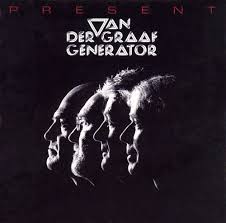
In 2004, the classic lineup of Van Der Graaf Generator played together for the first time since the '70s at a pair of Hammill's solo shows. Though he'd rejected the idea of another reunion for over a decade, he, Jackson, Evans, and Banton re-formed and issued Present,
a brand-new studio album, in 2005. Fans and critics agreed on its
significance and merit. It made several year-end lists, including The
Wire's. A live record was cut at Royal Albert Hall that year and issued
in 2008, the same year as their next studio offering, Trisector. A Grounding in Numbers and Alt were issued on Esoteric in 2011 and 2012, respectively.
After a long email correspondence, Hammill invited the eclectic and prolific New York guitarist Gary Lucas (Captain Beefheart)
to his studio in Bath with no particular goal in mind. Ideas flew fast
and furious and the pair emerged with the accessible yet thoroughly
experimental The Other World.
It was issued by Esoteric in February of 2014 followed not long after
by another solo release, ...All That Might Have Been. 2017 saw the
release of Hammill's 35th solo LP, another ambitious, entirely self-played collection called From the Trees. https://www.allmusic.com/artist/peter-hammill-mn0000843607/biography
-
Van der Graaf Generator are an English progressive rock band, formed in 1967 in Manchester by singer-songwriters Peter Hammill and Chris Judge Smith and the first act signed by Charisma Records.
They did not experience much commercial success in the UK, but became
popular in Italy during the 1970s. In 2005 the band reformed, and
continue to perform as of 2016.
The band formed at Manchester University,
but settled in London where they signed with Charisma. They went
through a number of incarnations in their early years, including a brief
split in 1969. When they reformed, they found minor commercial success
with The Least We Can Do Is Wave to Each Other (February 1970), and after the follow-up album, H to He, Who Am the Only One (December 1970), stabilised around a line-up of Hammill, organist Hugh Banton, saxophonist David Jackson, and drummer Guy Evans. The quartet subsequently achieved significant success in Italy with the release of Pawn Hearts in 1971.
After several exhausting tours of Italy, the band split in 1972. They reformed in 1975, releasing Godbluff
and frequently touring Italy again, before a major line-up change and a
slight rename to Van der Graaf. The band split in 1978. After many
years apart, the band finally united at a gig at the Royal Festival Hall
and a short tour in 2005. Since then, the band has continued as a trio
of Hammill, Banton, and Evans, who record and tour regularly in between
Hammill's concurrent solo career.
The group's albums have tended to be both lyrically and musically
darker in atmosphere than many of their progressive rock peers (a trait
they shared with King Crimson, whose guitarist Robert Fripp guested on two of their albums), and guitar solos
were the exception rather than the rule, preferring to use Banton's
classically influenced organ, and, until his departure, Jackson's
multiple saxophones. While Hammill is the primary songwriter for the
band, and its members have contributed to his solo albums, he is keen to
stress that the band collectively arranges all its material. Hammill's
lyrics frequently covered themes of mortality, due to his love of
science fiction writers such as Robert Heinlein and Philip K. Dick,
along with his self-confessed warped and obsessive nature. His voice
has been a distinctive component of the band throughout its career. It
has been described as "a male Nico" and would later on be cited as an influence by Goth
bands in the 1980s. Though the group have generally been commercially
unsuccessful outside of early 1970s Italy, they have inspired several
musicians, including John Lydon and Julian Cope. wiki
-
-
click here Download discography via torrent from here
Maudie is a 2016 biographicalromantic drama film directed by Aisling Walsh and starring Sally Hawkins and Ethan Hawke. A co-production of Ireland and Canada, the film is about the life of artist Maud Lewis,
who painted in Nova Scotia. In the story, Maud (Hawkins) struggles with
arthritis, memory of a lost child and a family that doubts her ability,
before moving in with a gruff fish peddler (Hawke) as a cleaning lady.
Despite their differing personalities, they marry as her art gains in
popularity. The film was shot in Newfoundland and Labrador, requiring a recreation of Lewis's famously small house.
It was selected to be screened in the Special Presentations section at the 2016 Toronto International Film Festival and won a number of awards at other festivals. After festival screenings and wider releases, Maudie
received positive reviews. The fact that the film was shot in
Newfoundland was the subject of controversy in Lewis' native Nova
Scotia. Nevertheless, the popularity of the film sparked a resurgence of
interest in Lewis' art.
Chinese Take-Away (Spanish: Un cuento chino) is a 2011 Argentine comedy film written and directed by Sebastián Borensztein. The film was the highest grossing non-US film in Argentina in 2011.
In Buenos Aires, the bitter and methodic Roberto
is a lonely man and the owner of a hardware store. Roberto collects
bizarre worldwide news in an album as a hobby and his acquaintance Mari
has an unrequited love for him, but Roberto is always evasive. One day,
Roberto sees a Chinese named Jun being expelled from a taxi while he is
watching the landing of airplanes in the airport and he helps the man to
stand up. Jun does not speak Spanish and shows a tattoo with an address
on his arm. Roberto heads to the spot with Jun and discover that the
place belonged to Jun's uncle that sold it three and half years ago.
Roberto goes with Jun to the police station, to the China's embassy and
to a Chinese neighborhood to seek out his uncle but it is a fruitless
search. Roberto lodges Jun in his house and after a series of incidents,
he finds a delivery boy to translate Jun and he learns the dramatic
story of his life.
 Kedi is a 2016 Turkish documentary film directed by Ceyda Torun about the many stray cats that live in Istanbul. It premiered at the !f Istanbul Independent Film Festival on 21 February 2016 before being given a North American theatrical release on 10 February 2017. It debuted on the YouTube Red streaming service on 10 May 2017. It was released on DVD in the U.S. on 14 November 2017. The film received critical acclaim, and grossed over $4 million. Time magazine listed it as one of its top ten films of 2017.